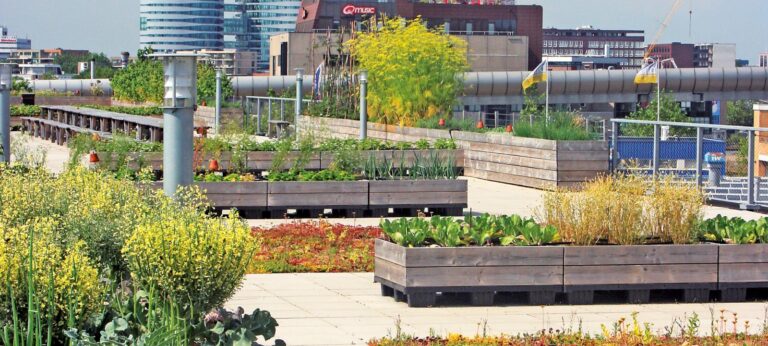
Urban agriculture supports organic farming by strengthening local food systems and transforming underused urban spaces into productive green areas. By growing food closer to where people live, cities can reduce transportation emissions, recycle organic waste into compost, and promote biodiversity. Community gardens, rooftop farms, and other urban growing methods also improve access to fresh, healthy food while making better use of limited urban land.
Why Urban Agriculture is Important
There are many benefits to urban agriculture:
- Increases access to fresh food and green spaces in areas of the city which are historically disadvantaged. This can also reduce the effect of climate change for its residents
- Urban farms offer educational opportunities for communities to understand how food is grown and where it originates, encouraging more sustainable food choices
- Due to the variety of crops they produce, urban farms attract different animals, including pollinators. In the face of ecological threats from climate change, these farms provide important habitats and ecosystem services that support wildlife
- Urban agriculture provides accessible, hands-on experience and STEM education within these communities, serving as a valuable pathway to careers in the agricultural workforce
How New Jersey Is Supporting Urban Agriculture
New Jersey is home to a diverse network of urban agriculture organizations that are turning unused spaces into thriving gardens, farms, and community resources. These organizations play a vital role in improving access to fresh food, promoting environmental sustainability, and strengthening local communities through education and workforce development. While each organization may differ in their approach, they share a common goal in advancing food security and creating stronger communities across the state. Here are a few listed below: